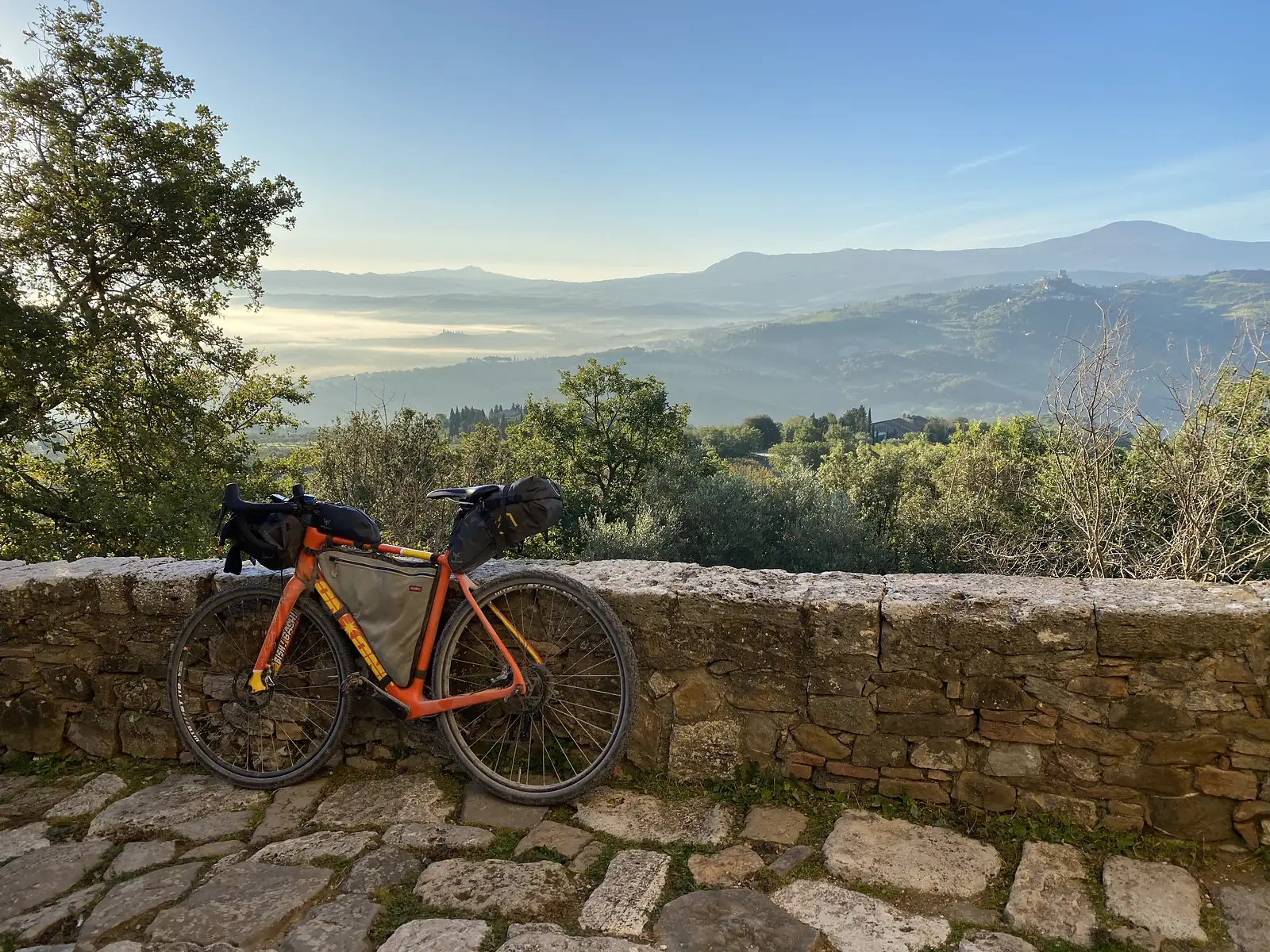
A guide to bikepacking bags
Real experiences and how I’ve discovered what works for me. A run through of gravel bike bags and how you might use them.
Introduction.
I’ve used about 20 different bags to carry stuff on my journeys around Europe and I’ve learnt a lot since I started with off-road bike touring in 2017. Here I’ll go through the different types of bags and how they and I have evolved.
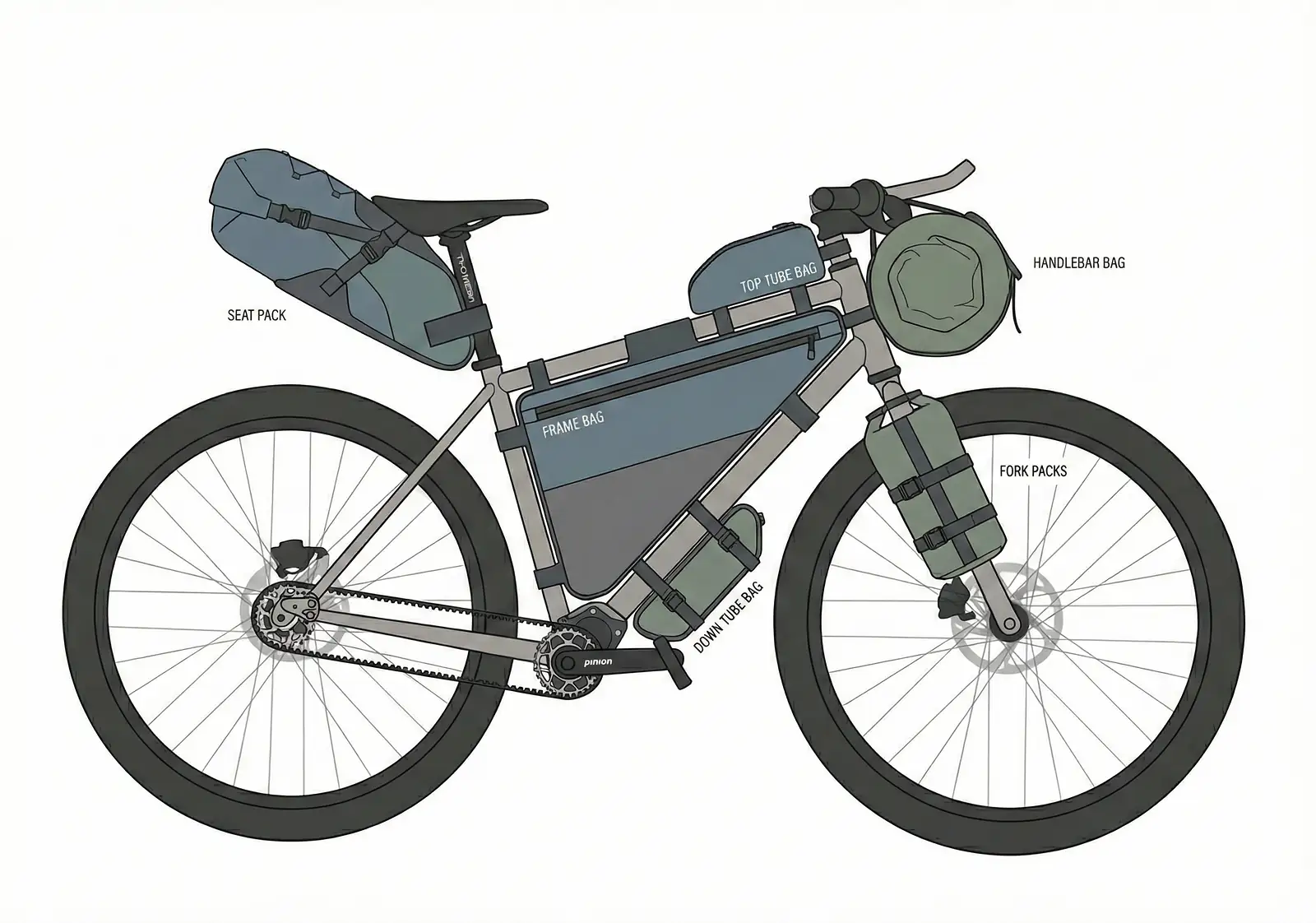
- Saddle bags / seat packs
- Fork bags / fork packs
- Frame bags / frame packs
- Top tube bags
- Handlebar bags
- Stem bags
- Cycling backpacks
The main rule for bags is that it depends on what you’re carrying which in turn is dependent upon what you’re doing. Are you cycling 7000km on the European Divide sleeping in forests and eating cardboard nut bars or are you off for a lazy 20km around a local forest. Are you cycling on rough off-road with lots of carrying or on smooth asphalt pretending to be a roadie for the day?
This article mainly covers the type of riding I do: 1) 20km - 100km trips close to home where I just need a place to store a banana or two and some extra clothing appropriate to the weather 2) a week or a few days local bikepacking with tent, food and all that and 3) 7-14 day trips around Europe, 400km to 900km at least 50% off-road, unknown quality of trails, usually staying in B&Bs or hotels.
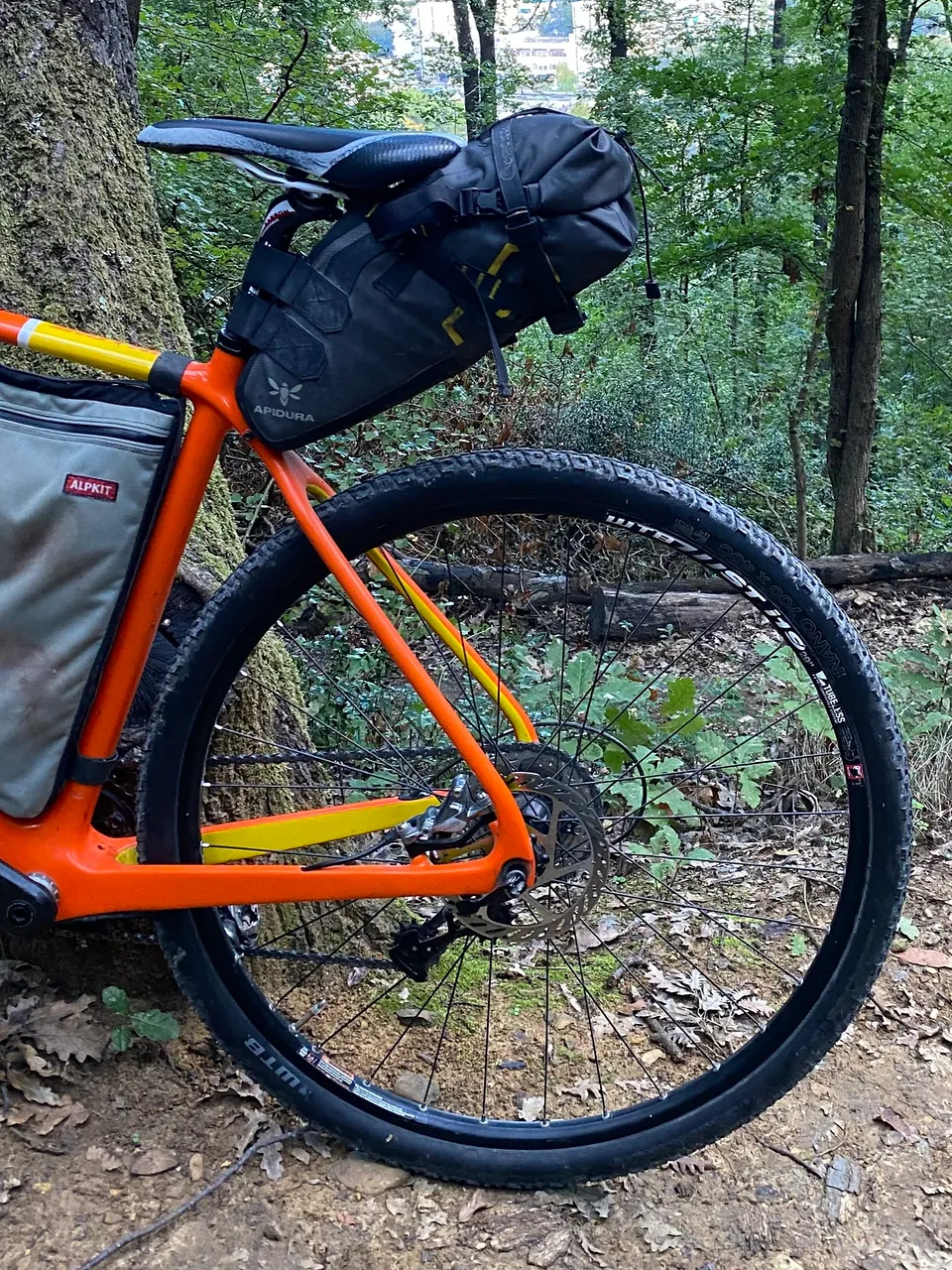
Bicycle saddle bags.
What is a bike saddle bag / seat pack?
This is any kind of bag that sits below where you’re sitting. They attach to the saddle and seatpost. I’ll not discuss the tiny roadie packs because they’re useless for adventure biking since they couldn’t even fit a spare tube in them for a real off-road bike.
How to use a seat pack?
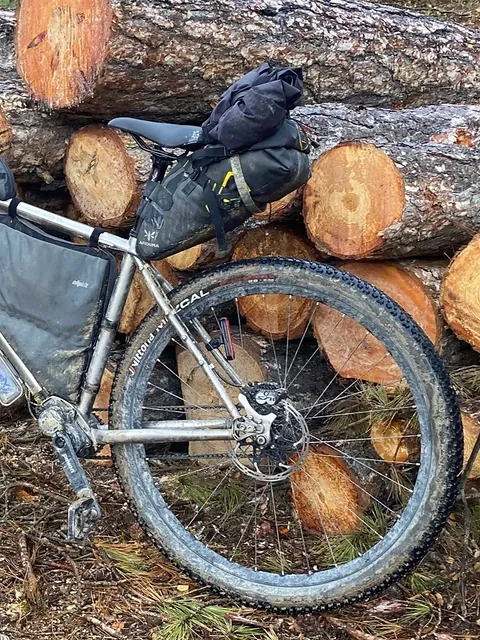
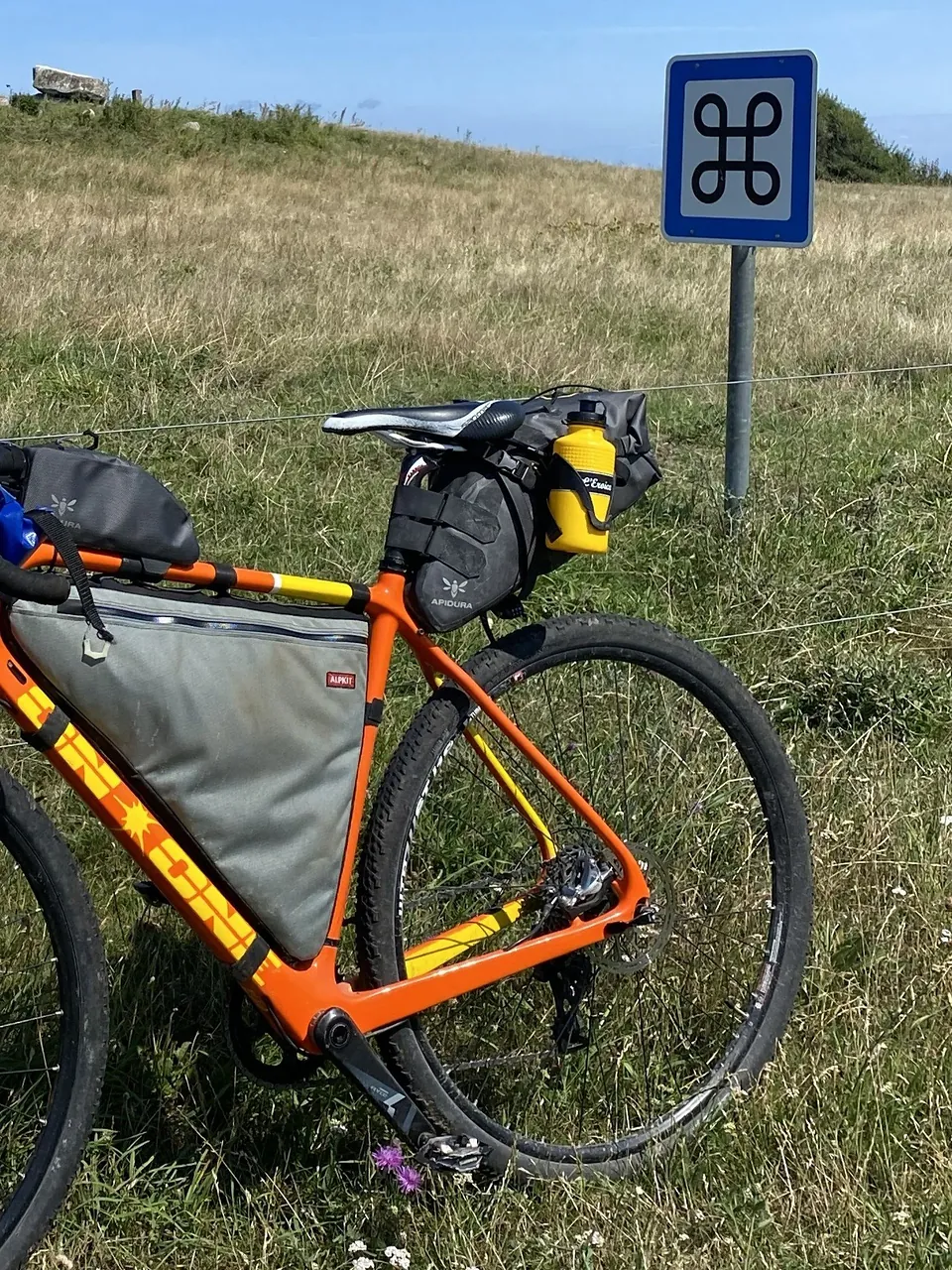
- The bottom part of the bag is very close to the frame and is great for storing heavier items. I often put stuff in here I only use at camp/hotel e.g. toiletries, heavy food.
- Higher up the bag I put lighter stuff and usually keep all my “close to the body” clothes in here, also for off the bike. Again I don’t expect to open this bag during the ride.
- The bags almost always come with extra bungee-like straps which are great for stashing bits of clothing from time to time. My lock (I use a simple strap lock) fits nicely around the bag too.
- Finally since I’m lazy, this is a semi-permanent fixture on the bike that I use for storing clothing on local rides. I also like to think it works as a mudguard but it really doesn’t: I usually come back with the giant streak of mud up the back of my jacket even if this is in place.
Seat packs I’ve used
- Apidura Expedition Saddle Pack 14l. I’ve been using this since I got it in 2017 and it remains my “go to bag”. The materials feel high quality and it has never let me down. Nothing has ever got wet in it, despte torrential downpours and mud thrown all over it. Lots of straps for attaching stuff. For me it has always felt really solid on the bike with no sway.
- Ortlieb Seat-Pack 11 L. I wasn’t looking for another bag, but I was off on a trip with the familiy and we needed some extra space so I thought I’d try something new. This is also a very solid bag. In some inexplicable way it doesn’t feel quite as “nice” as the Apidura; perhaps its styling is what gets to me? But it has also never let us down. The reflectors are a nice idea.
Issues with seat packs
- Saddle bag sway. I’ve read many descriptions of seat packs that sway like some kind of weighted pendulum forcing you to wobble on the bike like an overfed penguin. My experience is that when packed and secured correctly there’s never a problem. The bag might move slightly, but it doesn’t sway. At one point I even bought into this sway marketing and bought a fancy metal bracket to stop the sway, though the main reason I bought it was as a place to attach water bottles (it was really good for that).
- Depending on the saddle and the bag type, it can be quite a palaver to get the bag on and off. This got so annoying that I stopped taking it off at nights and it is now semi-permanently resident on my bike. To help cart its contents around I started placing an ultra light repeated use shopping bag as the last item. That way you can quickly fill it up with stuff at the end of the day (e.g. going into a B&B), plus its a shopping bag!
- I once forgot to attach the closure straps and continued on my way up a rocky single track only to discover after a km or so that the back end of the bike felt quite light! Fair enough, most of the contents had dropped out; fortunately I could retrace my steps following the Hansel and Gretel like trail of clothing back to where I opened the bag in the first place.
- Mounting lights is a problem. The back of the pack is a great place for a light. However the mounting position will vary a lot (depending on how much stuff you have in the bag) and different rear light brands vary in their attachments. So, despite the multiple mounting points on the Apidura and the Ortlieb, I’ve never been secure my brand of lights would be secure: they just bounce around a lot. I say stick to mounting rear lights on the frame.
Alternatives to seat packs
- Tailfin. Immediately prior to my first long trip back in 2017 I fell for the Tailfin sales pitch of “massive fucking sway will kill your ride”. So I signed up as one of the very first to buy the product. Fortunately the kind folks at Tailfin said it wouldn’t arrive in time and I switched to the Apidura. So I’ve never tried the Tailfin, but for me when I’m frequently travelling with the bike I’d probably not want the extra hassle of special thru axles and more attachments (just more stuff to go wrong). That said I’m a massive fan of Tailfin (see the other bags) and I think this system would be great in many circumstances.
- Bike panniers. For some reason pannier bags are never really included in “bikepacking gear”, but they should be and are a fine alternative to saddle bags if you’re not being too adventurous. I’ve never used biycle panniers because of the amount of pushing/carrying I’ve ended up doing and they get in the way of that.
What I’d get now
- I'd stay with the Apidura Expedition Saddle Pack 14l. They have a 17l now, but I’d stay at 14l: never want to get into the sway zone.
Fork bags.
What is a fork bag / fork pack?
Any kind of bag or pack attached to the front forks. Mostly symmetrical, but occasionally people go with different set ups on each side.
Unlike with seat packs, they’re usually two parts: the attachment to the bike and then the bag. You’ll almost always leave the attachment mechanism on the bike and take the bags with you.
Attachment mechanisms always attach via the braze-ons / bosses / barnacles (choose your own language). You can also create “artificial” bosses e.g. if your forks don’t have them by using kits from e.g. Ortlieb, just be careful on compatibilty with frame materials.
Cage attachments, which look like something the military would use, allow pretty much anything to be attached to the forks from tent bags to roadkill.
Bag attachments are (in my limited experience) proprietary to the bags e.g. Ortlieb, and you can’t use them with anything else.
How to use a fork bag
- Keep the weight low in the bag if possible.
- Keep the bag weight (and rough sizes) symmetrical (loading up with 7kg on one side and a lightweight puffer jacket on the other will lead to the steering feeling like some Gremlin is pulling your bike to the side all the time).
- I like to keep the weight quite central… further out… further leverage.
- Also these are usually the first thing that hits the ground when you crash / pause with the bike on the ground. So put things in here that don’t break e.g. no ipads.
- I’ve often put trainers and sleeping stuff in them. Occasionally tents, but usually without the poles (don’t want them snapping). They’re also ideal for light weight clothing and I often put rain stuff in them, though if you need to get that out you may end up with some balance issues.
Fork packs that I’ve used
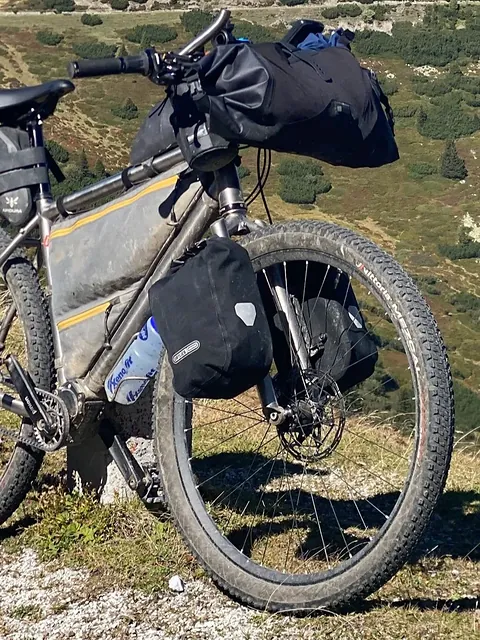
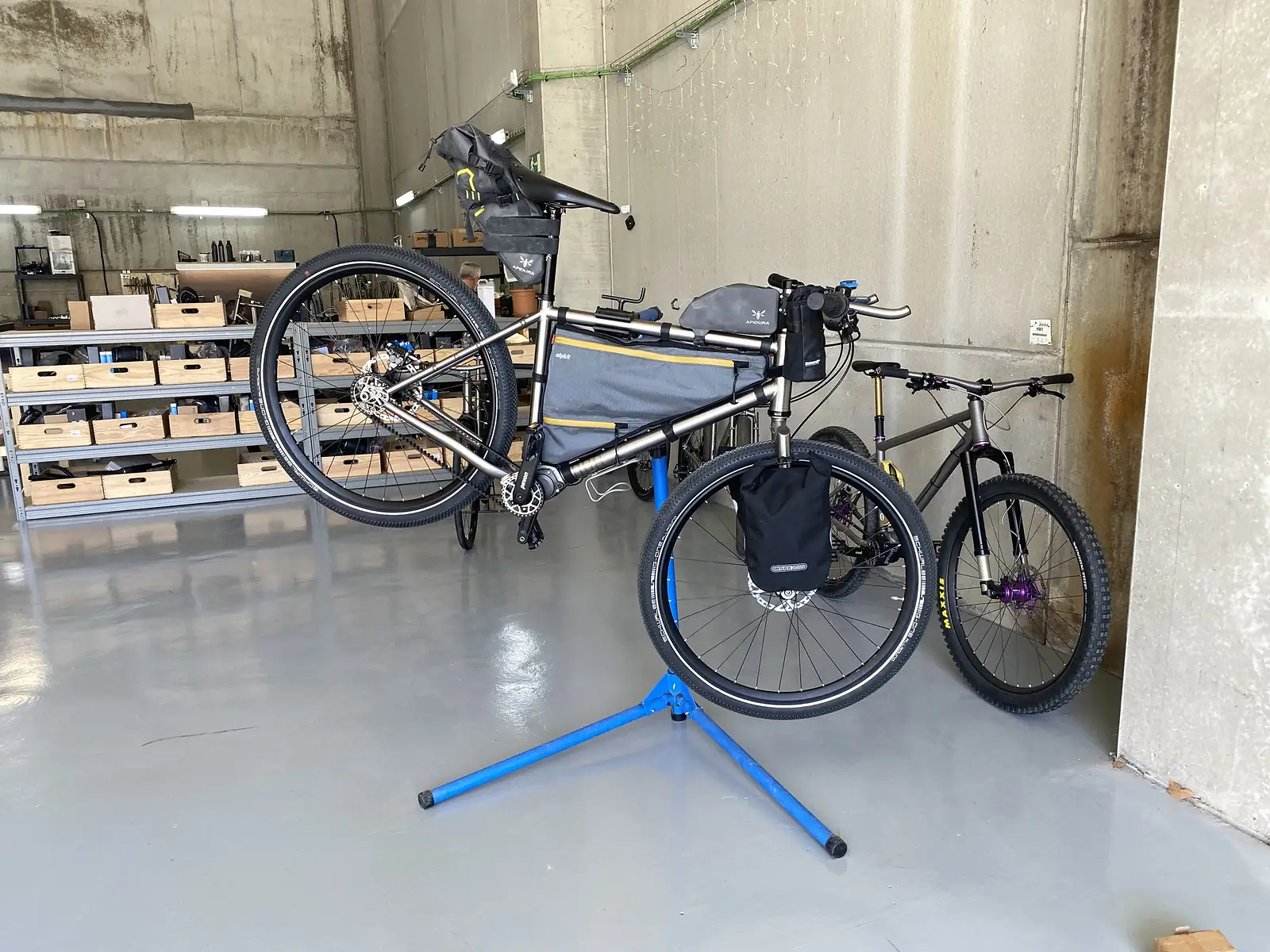
- Ortlieb Fork-Pack 5.8l. They stick out a bit and I think they’re a bit ugly but they are functionally fantastic. Waterproof. Really nice rectangular space. Solid on the bike, and almost instant to take off which makes them fantastic to use on trips where you’re going in/out of a B&B/hotel each night.
- Tailfin Cargo Cage, Large plus Tailfin Cage Pack 5l. I got these because I wanted a more flexible mechanism for carrying e.g. tents, drybags and I wanted a narrower profile than the Ortliebs offer.
Issues with fork bags.
- Can be awkward cycling through narrow gaps, the Ortliebs in particular stick out a fair way.
- Taking on/off is a delight with the Ortliebs (the kind of design that you look forward to using), but with cages you’re in a much messier place most of the time.
- They’re generally quite small volume, but that said you don’t want too much stuff weighting the front forks.
Alternatives to fork bags
- Front panniers. Much more solid and lots more space. But you’re not going to enjoy lifting bikes fitted out like that over gates and rocks.
Depends on the circumstances. The Ortliebs (or those with similar quick attachments) are the winners if you want to take stuff up to your room quickly in the evenings (even their closures turn into lovely little handles). If you’re after flexibility then the cage systems can’t be beaten, they’re also usually a little narrower in profile as the bags sit nearer the forks.
Bike frame bag.
What is a frame bag / frame pack?
This is a storage bag that sits in the main triangle of the bike. You can get them to fill the full frame or just a part of it e.g. half frame; though there’s apparently now “wedges” which fit in one of the angles of the frame.
How to use a frame bag
- If you’re lazy like me then they’re a semi-permanent addition to your bike. If its always there then its great to use for any kind of trip.
- In the lowest part of the bag I put the heaviest things I have: bike repair stuff. A multi-tool and Leatherman along with all the repair bits such as tubes, valves, CO2 etc. Having heavy stuff low down keeps the bike more balanced and the pocket down there is great at keeping stuff from bouncing around.
- I use the upper part of the pack for heavy things that I might need access to e.g. electronics (batteries, drones), suncream, insect spray, food storage. I’ve also used this space for cooking and eating equipment.
- This is the best space on the bike and I find it almost more useful on short trips (when I’ve not got many bags on the bike) than on longer trips. Using this space for a banana and a Mars Bar means I’ve usually no need for a back pack.
Frame packs I’ve used
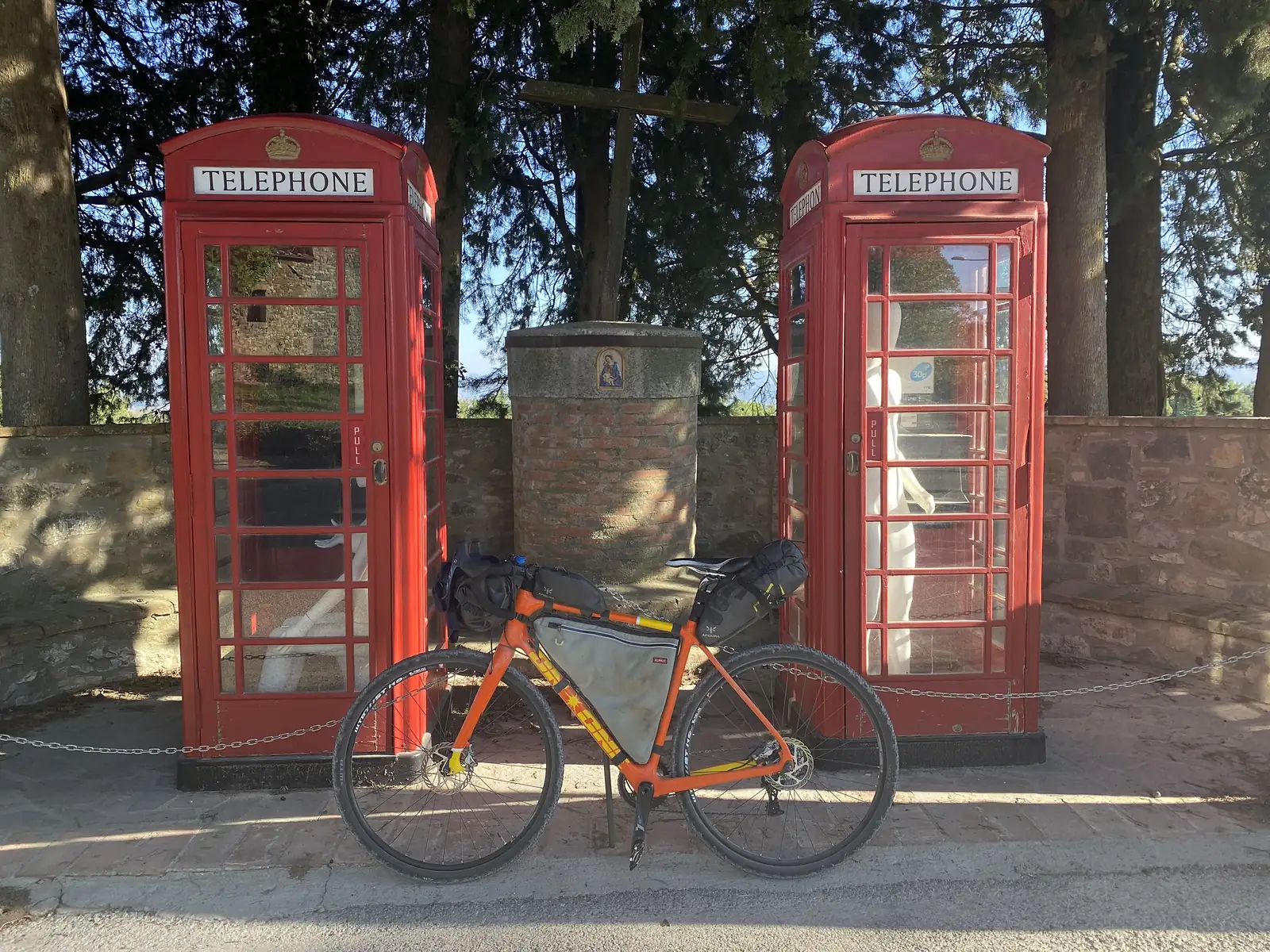
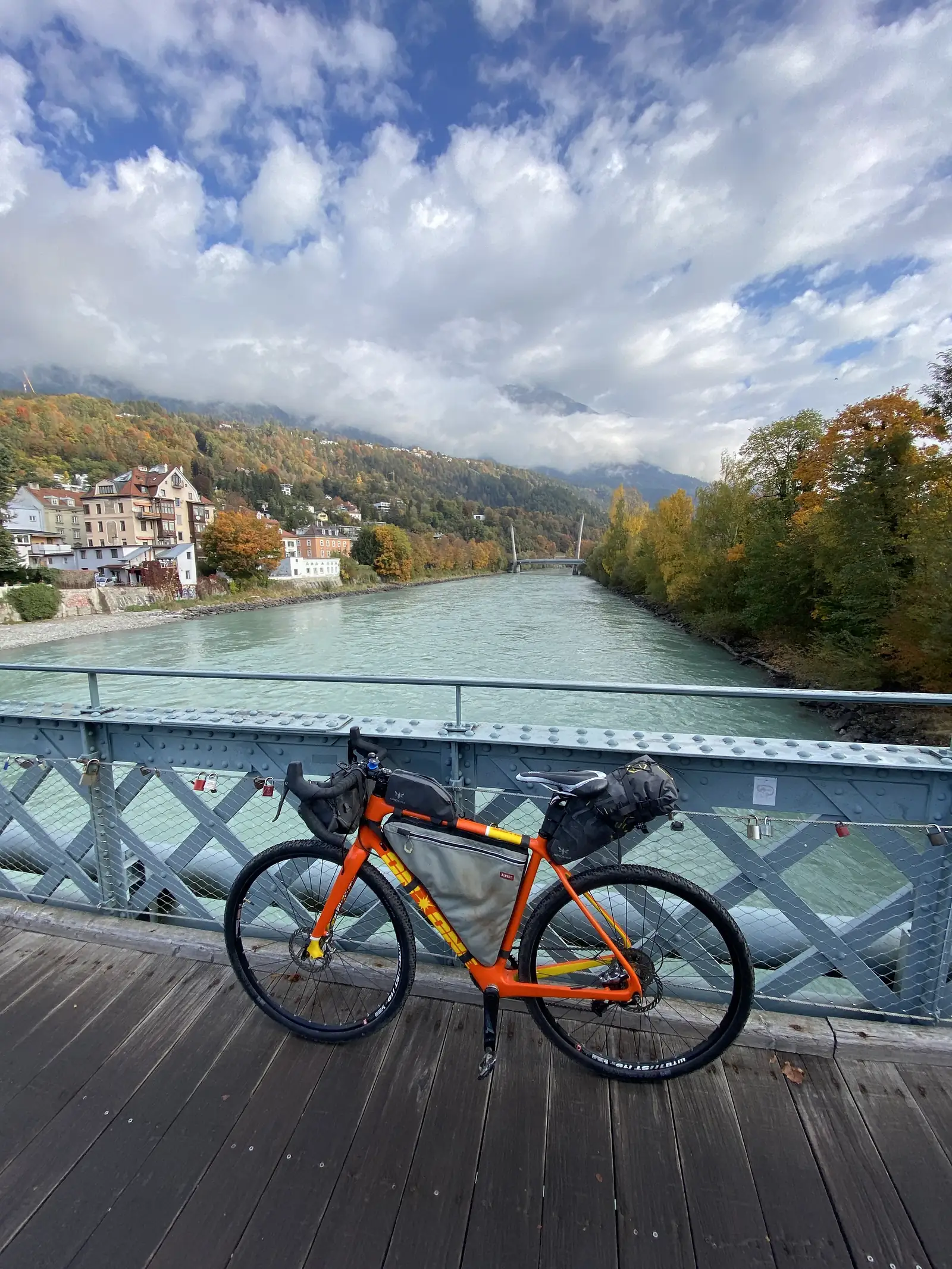
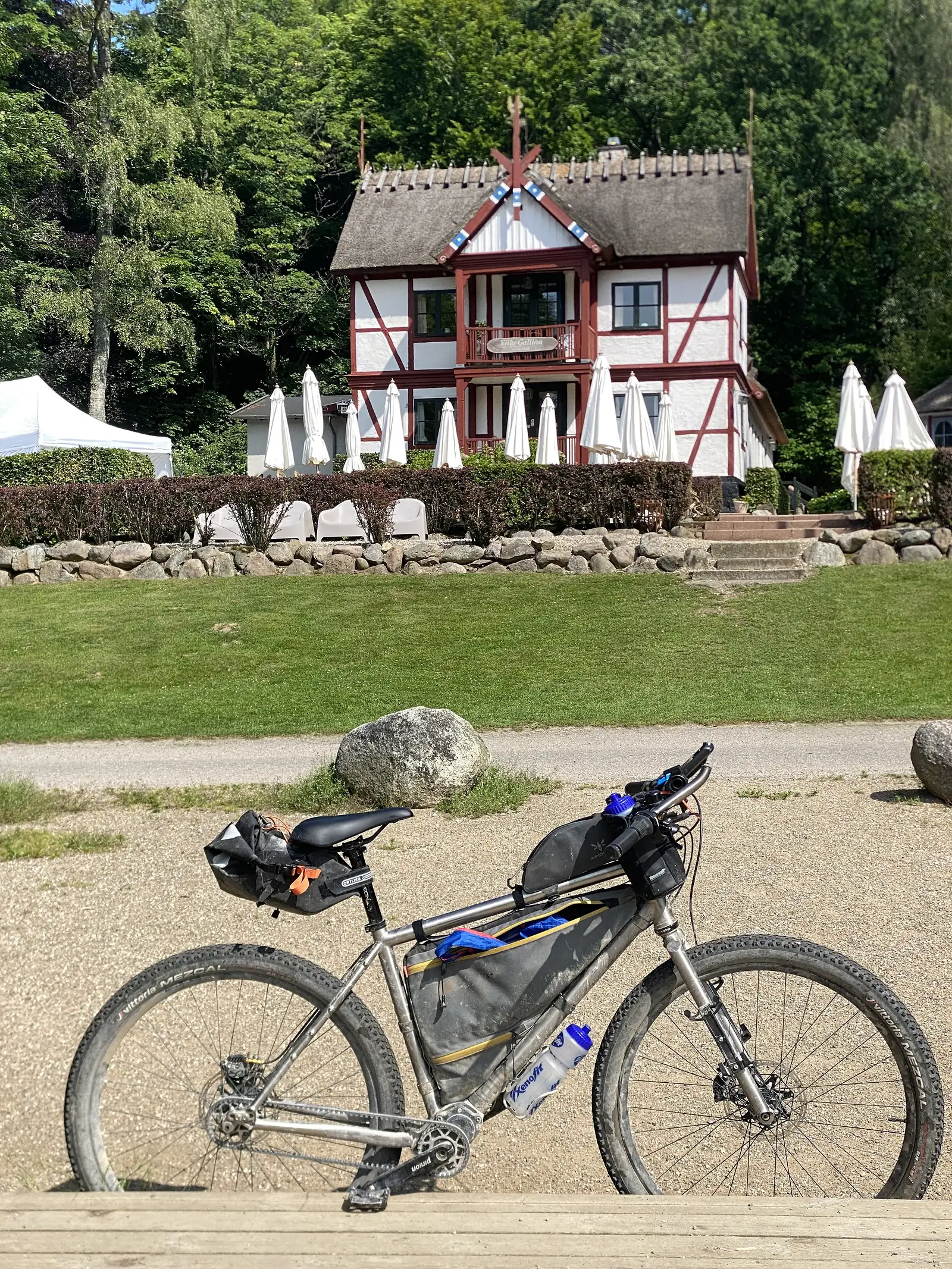
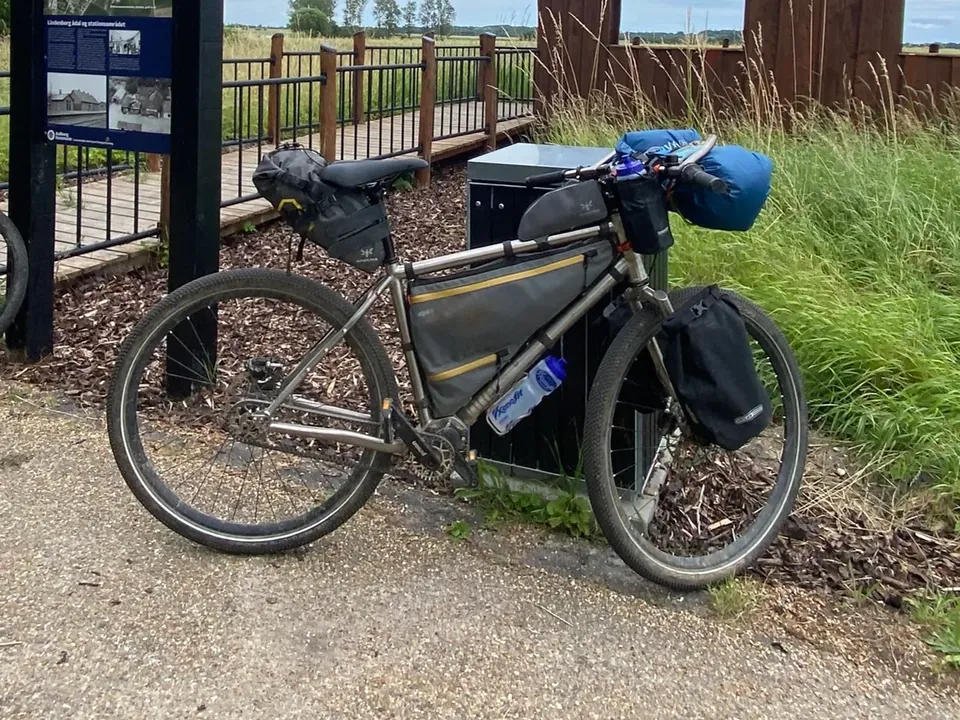
- I’ve used two Alpkit Stingray custom made frame bags one for each different bike. They’re good quality (many thousands of km and no issues) and a fantastic price.
Issues with frame bags
- Full frame bags take away the traditional placement of water bottles. You might even have issues with half frame bags doing the same. You’ll have to find some other solution for water.
- I’ve never tried a half frame bag or a “wedge”, but I just can’t see them holding any significant amount of gear. Perhaps you could get a cycling jersey in one, or half a nut bar. Either way pretty useless.
- Not always guaranteed to be waterproof but I’ve never had any leaks using Cordura 1100D.
- They’re a pain to take off and it kind of stops me from giving the bike a really good clean sometimes.
- Wind is an issue with frame packs (and made worse if you’ve lots of other bags too). They act like a sail and sudden gusts of wind can feel destabilising. So mainly a problem in windy countries such as Denmark and the UK, further south in Europe and in fair weather you’re going to be ok.
Frame bags I’d get now
- I will always go custom fitted. And at least 6cm wide, though there’s perhaps space for up to 8cm on my bike. For value it is hard to look past Alpkit.
- I’d definitely consider the braze-on options, since it is already a semi-permanent part of my bike. Fixing this way would reduce clutter around the bike frame. So in future I’d look for a bike with sufficient braze-on points evenly distributed about the frame triangle. For inspiration take a look at Gramm Tourpacking, the bags of my dreams.
Top tube bag.
What is a top tube bike bag?
Any bag that attaches above the top tube (the one running from the seat to the handlebars) of the bike. Almost all of these are designed for the front of that tube, but some can also fit in the area under the front of the saddle.
How I use top tube bags
I’ve used these a lot. There’s always one on my bike. Its probably the most protected part of the bike in case of accident and so recently I’ve been keeping a small drone in it. But I’ve also used it for simple electronics e.g. chargers and batteries.
Top tube bags I’ve used
- Apidura Expedition Top Tube Pack 1l. This is the only top tube bag I’ve ever had but I don’t like it much and I’m too tight fisted to replace it. It is made of really great fabric (like all Apidura kit) and has been amazingly waterproof. However (no. 1) the zip is very fancy and waterproof, but broke after less than a year of use: big credit to Apidura who send a next generation one instantly. However (no. 2) the zip on this next gen one was identical (I am really really careful opening it now… so always have to stop to use two hands). However (no. 3) the velcro straps holding this next gen one on are too long and stiff leading to a stiff bit of material sticking out and rubbing against my legs at times (I’ve often taken to using a Voile strap around the bag to stop this, but clearly then limiting access to the bag). Apidura if you’re listening: you need to redesign this thing.
- In 2021 I got an AlpKit Fuel Pod Rear which they no longer make. It fits under the nose of the saddle but I’ve rarely used it as it gets squashed when I’m standing over the bike.
Issues with top tube bags
I use these a lot, probably opening and closing a few times a day even on short days rides. And if you use them a lot they need to be well designed and not just well made.
So perhaps best to consider…
- Top tube bags are open to the elements, they must be waterproof (especially to rain from above).
- You need access to them often when you’re riding so opening them must be possible one handed.
- You’re going to open them a lot so the mechanism must not be prone to failure.
- They need to be neatly and solidly fastened to the bike. (This will also aid opening and closing if they’re very solid).
So what fits this…
I’d definitely go with a closure that was more like a cover than a zip. And I’d really look to bolting the thing on (though that would need a new bike for me… I’ll remember more braze-ons next time).
After my celestially magnificent experiences with the Tailfin Bar Bag System I’d go for them again and the Tailfin Top Tube Bag – Flip.
Handlebar bag
What is a bicycle handlebar bag?
This is any bag mounted to the front of the handlebar and moves with the bars when turning. Almost all are some variation of tube like thing but there’s a ginormous variation in how they’re fitted to the bars and that is key.
How I use bar bags
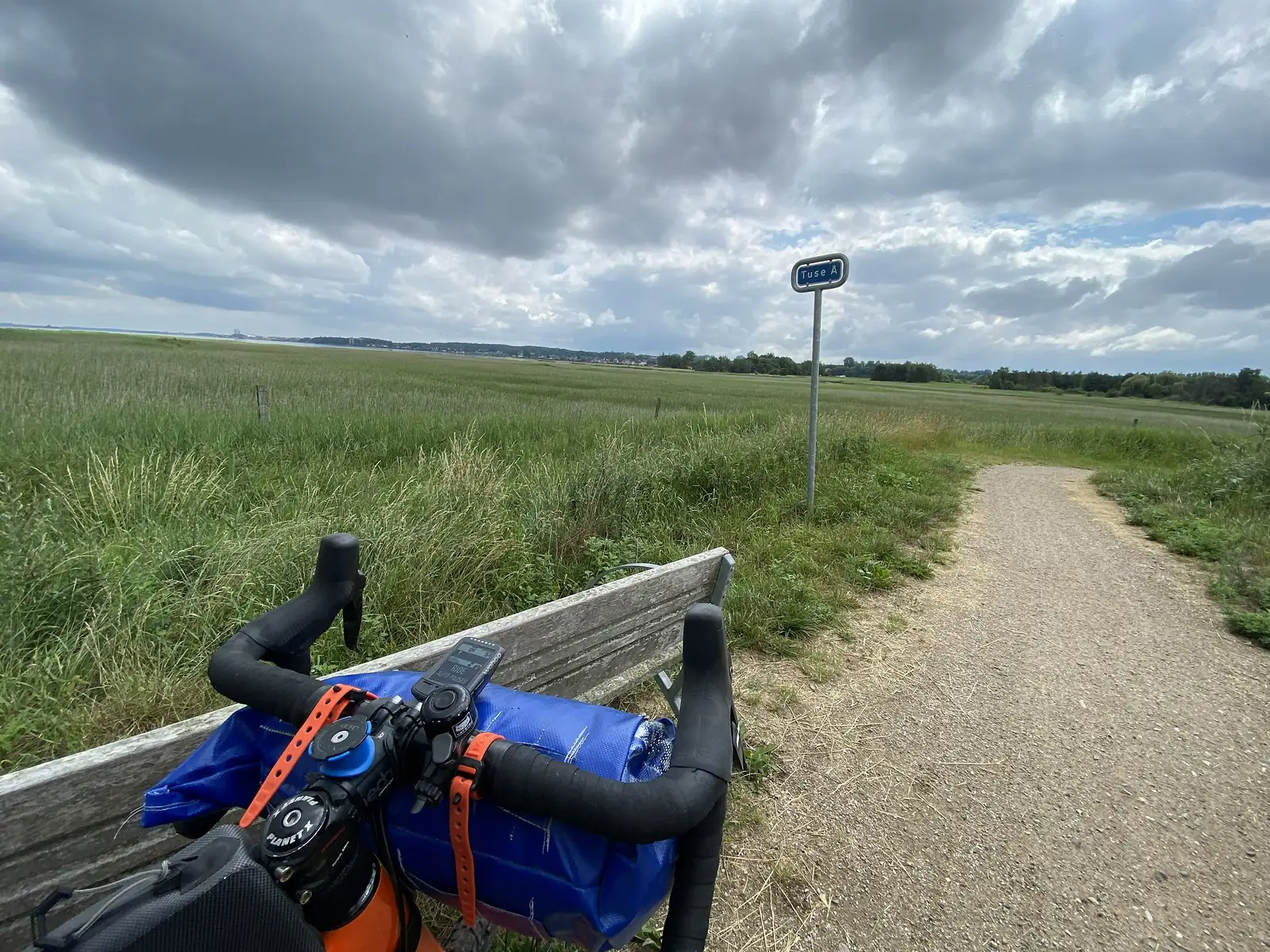
I’ve used bar bags with drop bars and flat bars. The main difference for me is that the narrower bars of the drop bars mean the cylinder bag is smaller and carries less. Note that even the ultimate bar bag system (see below) is limited to 4kg of off-road carrying but that is actually quite a lot.
Especially with the narrow bars I’ve often put lighter stuff in e.g. trainers, rain gear. I find I can put more weight in the wider flat bars (I use over 700mm) without the steering feeling too weird.
Bar bags that I’ve used
- Before heading off on the Via Francigena I made one myself, thinking “how hard can a cyclinder be”. Turns out it is quite easy to make but I broke countless sewing needles on the tarpaulin material and even after it was made I had to seal all the seams with Gorilla Tape. Probably weighed about 1kg.
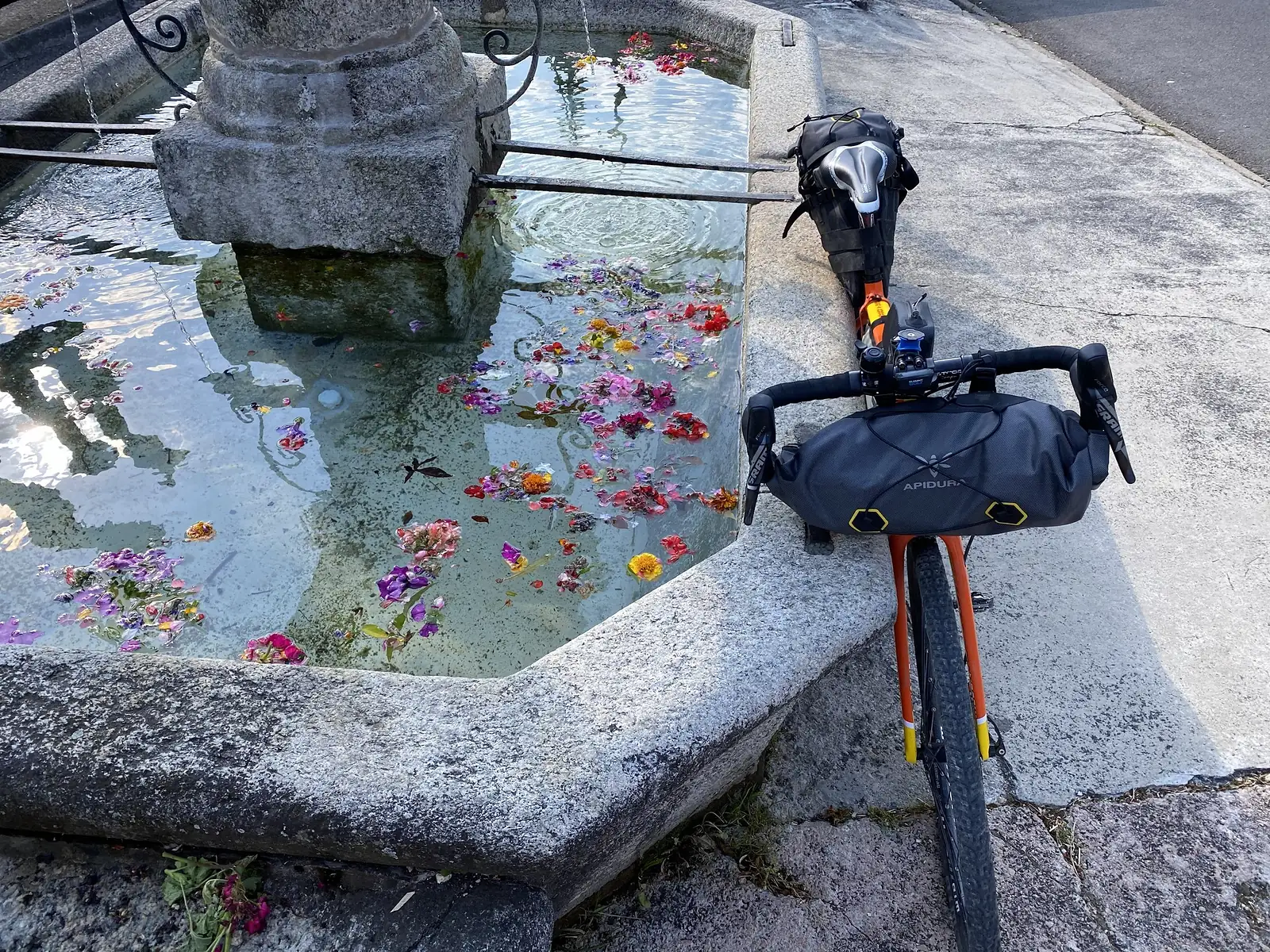
- Next up was the Apidura Expedition Handlebar Pack 14l. This is excellent at what it says: ultra lightweight (275g) and hyper waterproof. I loved this bag and it still feels almost new today many years and km down the line. It worked fine with both drop bars and flat bars, the main issue being mounting it and preventing it from leaning on the cables.
- To avoid cable crushing I fitted the Bagman Universal Bar Rack from Carradice and used it with the Apidura, but it is a right faff to fit and taking it on/off at train stations and airports was not going to be my bag. It also started to sink when used off road a lot. I’ve used this with a massive dry bag and it worked well for giving that extra flexibility.
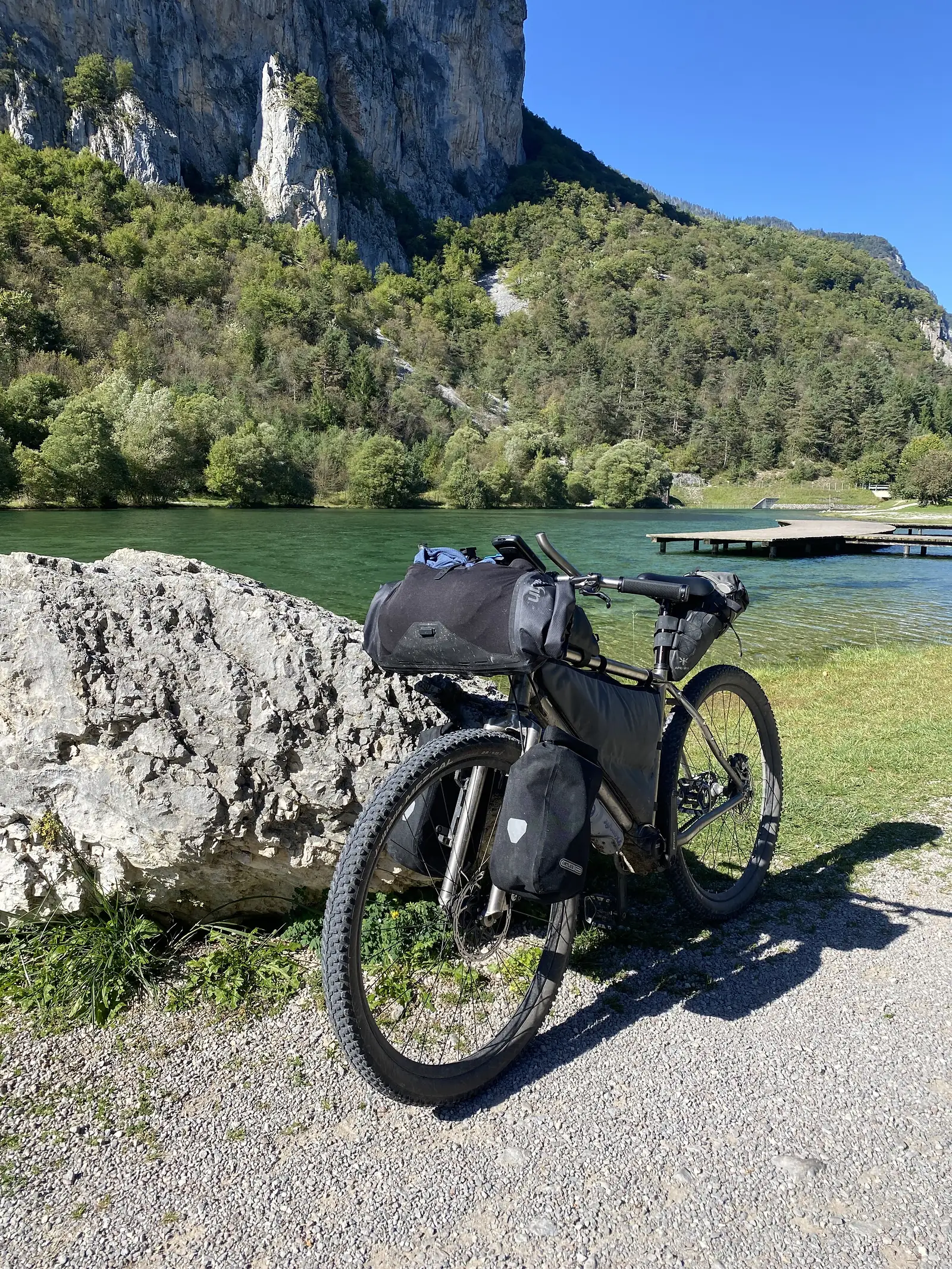
- I’m now using the Tailfin Bar Bag System Flat Bar 18.9l which came out in 2025. This thing is utterly transformative, mainly because of the handlebar mount system with double hinge meaning that there’s no danger of cables being crushed and it is solidly mounted at the right height all the time. Plus you can mount lights, phones, and GPS. Wow it is good. Taking it off is wonderfully designed, better even than the Ortlieb fork packs. The only downside would be the 859g total weight of the system.
Issues with bike handlebar bags
- Crush and bounce. When you’re riding off-road the bike will be bouncing up and down a lot. This means that any “loosely” fitted handlebar bag will bounce up and down too and start to crush your gear and brake cables. (Not an issue if you’re cables and gears are completely internally routed, but I’ve never seen that level of irreparability on an adventure bike). I’ve used spacers, extra racks and less weight in the bag over the years, but manufacturers are only just solving this problem. Well done Tailfin for being the first.
- Flat vs drops. Flat bars are tailor made for handlebar bags, but drop bar bikes are limited in the space. Even then you’ll fill that space and at times your hands will be rubbing against the bag: get used to it or switch to flat bars.
What bar bag system I’d get today
If you’ve got the money you’d be mad not to get the Tailfin system; out of all the bags I have this is the only one that is irreplaceable.
What is a stem bag?
Also known as feedbags (like we’re not horses), chalk bags (again we’re not climbers) and snack packs. They’re a small, almost universally cylindrical, and attached to one side of the handlebar stem.
How I’ve used stem bags
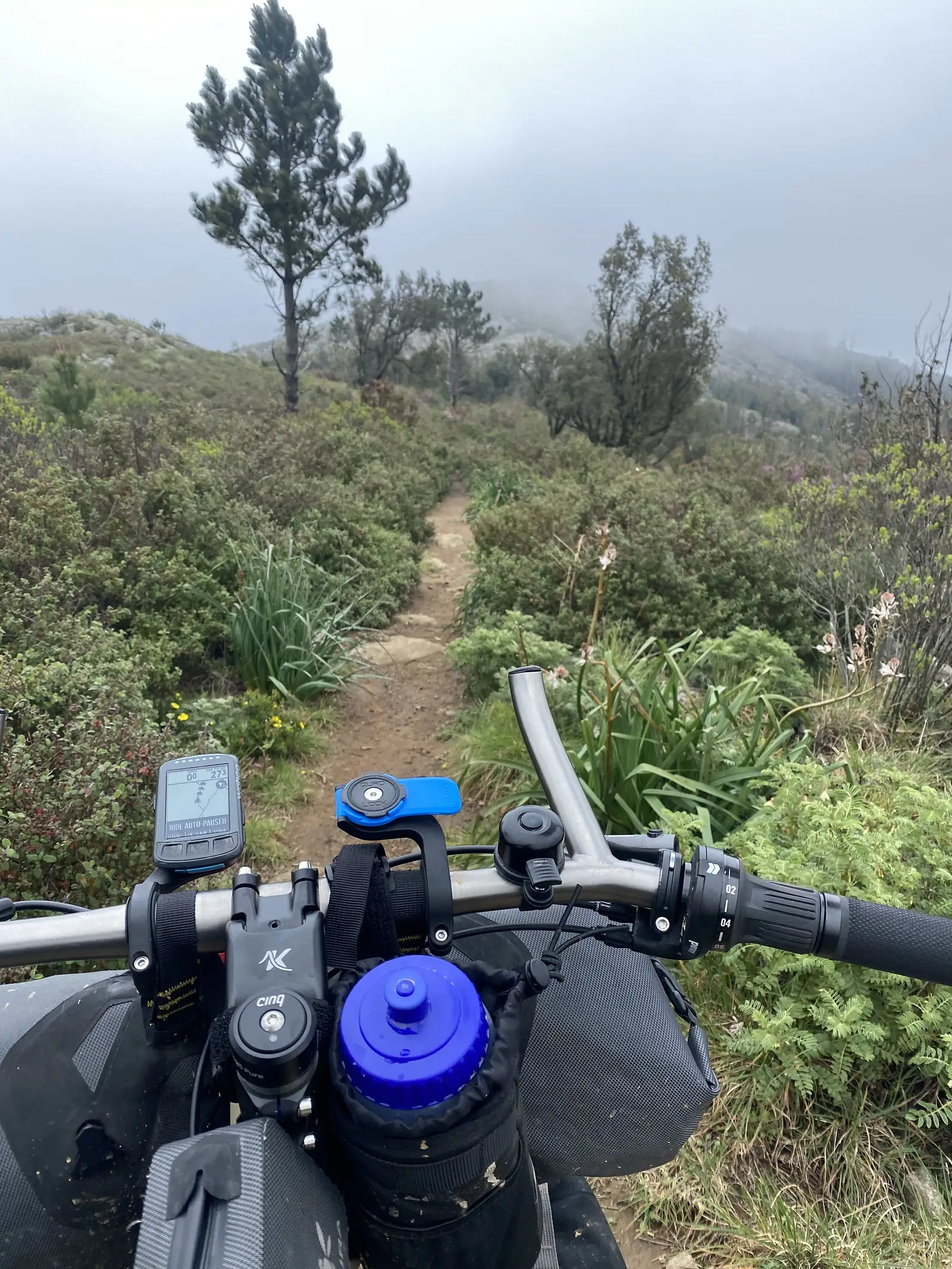
I’ve come to love having a “bottle sized bag” in the cockpit area where I can store a water bottle. Because a frame pack is a semi-permanent fixture on my bike, I lack great places to store water, and this is just a great alternative to that.
They’ve usually got some mesh pockets to put rubbish in too.
What I’ve used
This might well be a cheap low quality offering from AliExpress but I love it: Rhinowalk Bicycle Bag Bike Bottle Holder Cycling Water Bottle Carrier Pouch MTB Bike Insulated Kettle Handlebar Bag Accessories. I almost love its search optimised name more than the product itself but I liked this so much I got another.
It has a "thermal lining” which is amazingly useful for what I do… in Scandinavian winters it stops water from freezing and in Southern European summers it keeps the water cool (for a while at least).
Issues with stem bags
There’s often one side of the stem where all the cables pass and if you put a stem bag with something heavy in it (like a water bottle) on that side then you’ll crush the cables if you try to tighten it too tight to the stem… or if you let it bounce around… For that reason my “off side” stem bag, if I use it, is usually just for lightweight stuff e.g. sweeties and rubbish.
What I’d get today
I might look for something that connects better to the bike, but now that I’m using Voile straps the Rhinowalk AliExpress thing works really well. I’ll stick with it.
Cycling backpack.
What is a bike backpack?
Do you really need a rucksack “designed” just for cycling? Of course not, and if you buy a cycling backpack / cycling rucksack / bicycle backpack you’re probably falling for some marketing con trick.
How I use them
I’ve used a back pack on all my long distance trips and even some local trips around the forests (if I don’t have any bike bags on the bike).
They are good for a few things:
- When travelling, with the bike elsewhere e.g. the airplane hold, its great to have something to carry important things like passports and money in.
- In a similar way, when cycling and popping into the cafe or other fine establishment, its nice to have things I don’t want to lose really near me.
- They’re a great place to store water. Almost all backpacks come with space or at least a way out for a water tube. I’ve often found a big benefit of putting water in the backpack is that it stays cold for longer.
- I also often put electronics in this partly for the “nobody can steal them if they’re with me” thought and partly for the “I think they’re well protected placed deep in the rucksack” thought.
- Osprey Talon 33, this is a standard hiking day pack that has been iterated many times over the years. Mine’s from around 2017, but it still works fine. However ever since the major mistake of using this on my first Via Francigena trip I’ve never used it for cycling again: it is way too big.
- Osprey Syncro 12. Marketed as a cycling backpack and apparently no longer available. It works just fine. It is small and fits a good sized hydration bladder. Multiple good compartments and helmet attachment.
- Decathlon Forclaz Water Bladder 3l. This was great but eventually started to turn green (algae/mould); I was sure I’d washed it but all water bladders are hard to dry out properly. An interesting aside is that Decathlon recommend storing them in the freezer.
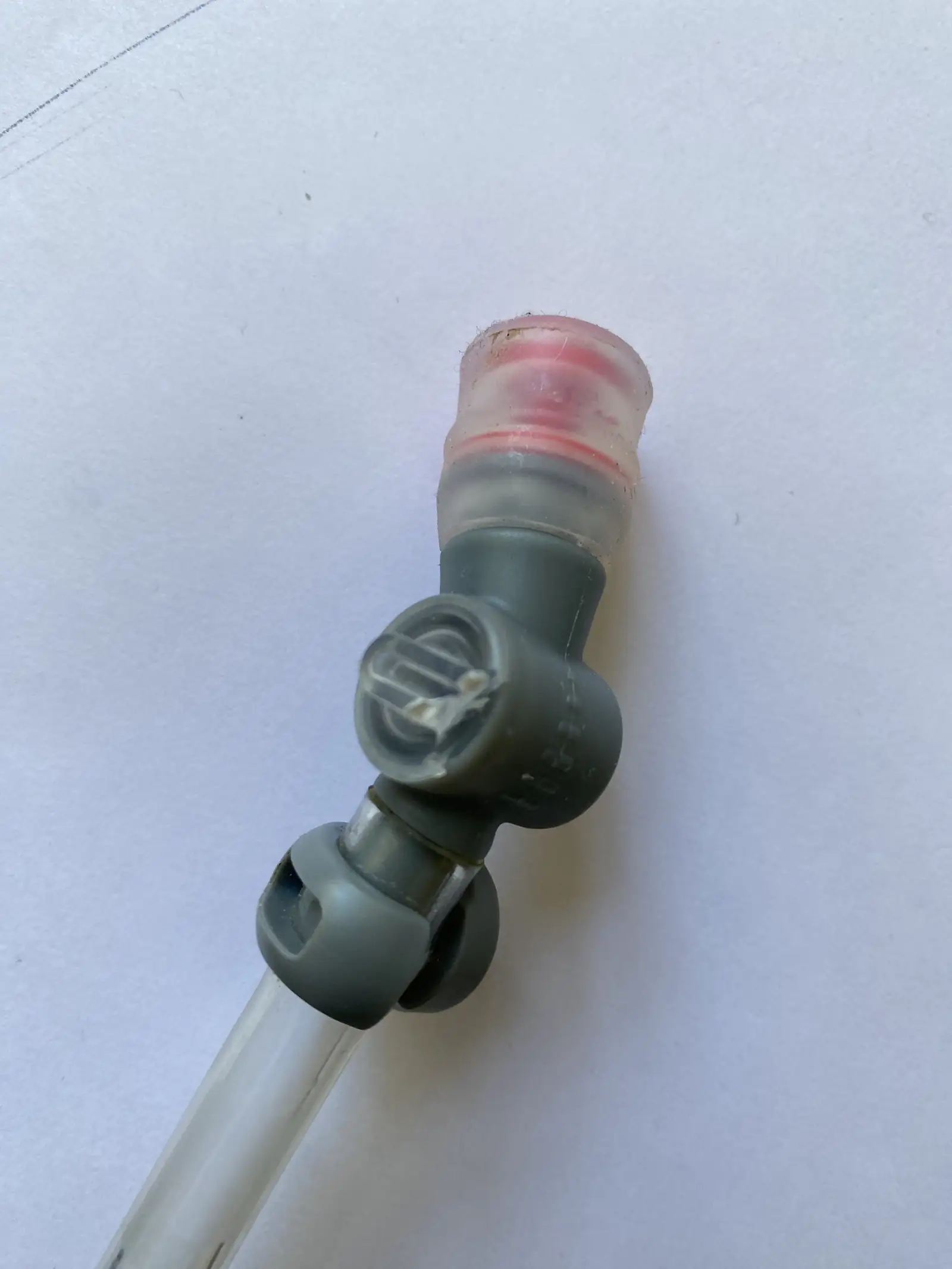
- Osprey Osprey Hydraulics Reservoir 2.5l. To describe this as shite would be an affront to excrement acrosss the world. Well actually the bladder itself is fine, but the bite valve was clearly designed by a heavily intoxicated earthworm. I’ve had two snap on me. Can’t be long before the class action lawsuit against Osprey on this one. I do not understand why they are still making them.
Issues with cycling rucksacks
- If you put too much stuff in one it will be horrible to cycle with. Having all that weight on your shoulders/back isn’t fun on a bike.
- When you’re in hot weather having extra insulation on your back is not a good move. You will end up sweating through your clothes.
Alternatives
Don’t use one.
A bicycle backpack that I’d get today
If Osprey redesigned their hydraulics system then I might be back. Otherwise I’ll find a small one (10l or less) from some other brand, probably European e.g. deuter.
A badly designed and therefore broken Osprey bite valve. Don’t buy it.
---